
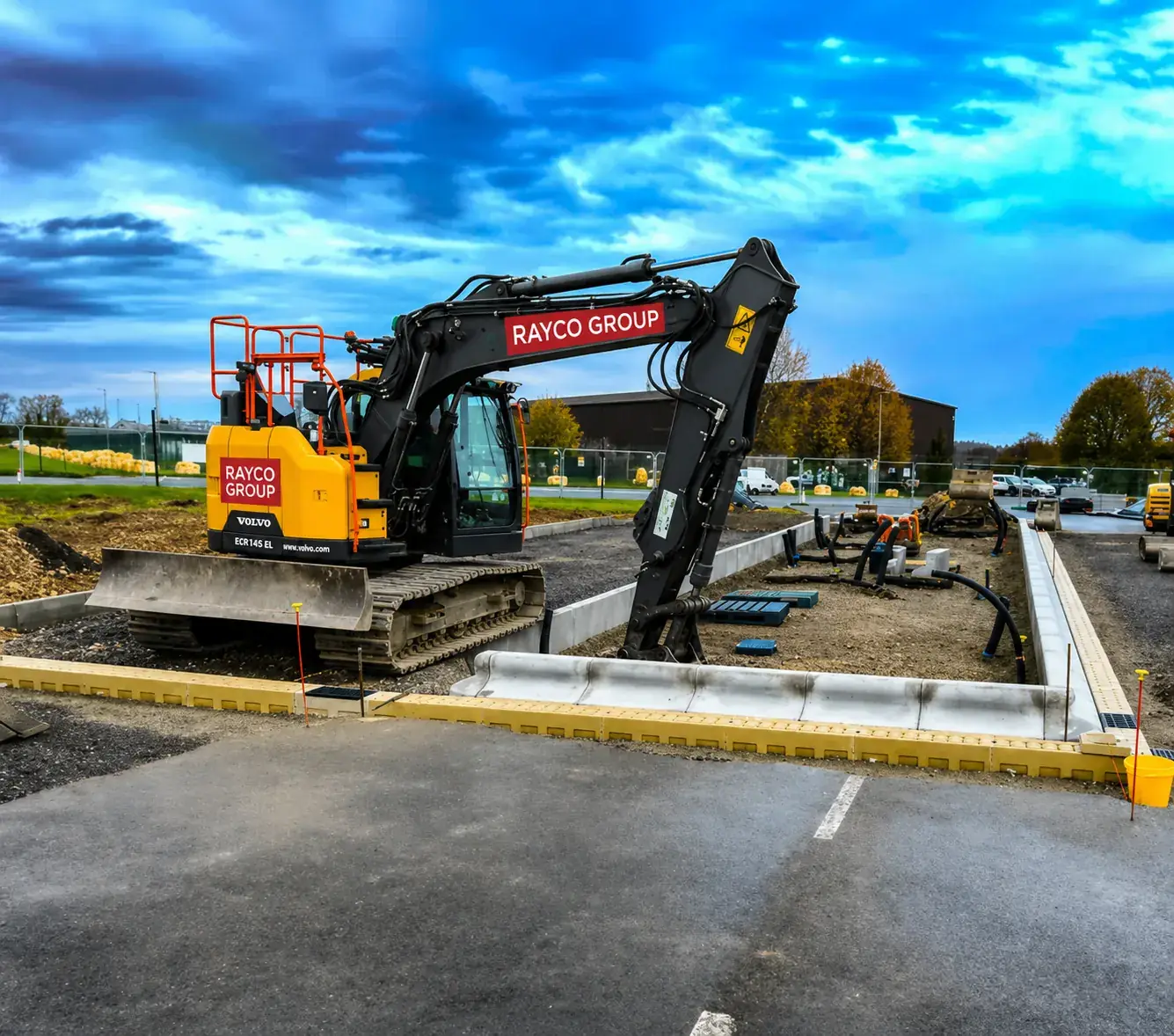
Car Park and Hard Standing Contractors in Ireland
A car park or hard standing is built like a road: excavate to formation, place and compact sub-base to the design thickness, install drainage and kerbed edges, then surface in concrete or bitumen. Areas taking loaded HGVs need a heavier build-up than car-only parking bays.
Overview
The difference between a car park that lasts and one that ruts in two winters is almost always the build-up under it and where the water goes.
Rayco Civils is a civil engineering and groundworks contractor based in Monamolin, Co. Wexford, working on sites across Ireland. Send drawings or a site location and we will price the works.
Scope of works
Design for the heaviest vehicle, not the average one
Loading bays, bin stores, delivery routes and fire tender access carry far higher loads than parking bays. Those areas are normally built with a thicker sub-base, or in reinforced concrete where turning and standing loads are constant.
Surface water and interceptors
Car parks generate significant run-off. Falls are set to gullies or channel drains, and storm water is taken to attenuation, a soakaway or the site network as the drainage design requires. Fuel or oil risk areas may require a petrol interceptor.
Frequently asked questions
Should a car park be concrete or tarmac?
Bitumen surfacing is common for parking bays and access aisles. Reinforced concrete is generally used where vehicles turn, stand or load repeatedly, such as yards, bin areas and loading docks, because it resists rutting and point loads better.
Do car parks need attenuation?
Frequently. Large impermeable areas increase run-off, so planning and drainage designs often require attenuation, permeable surfacing or a restricted discharge rate.
Can you build a hard standing for machinery or storage?
Yes. Yards and hard standings for plant, containers, bins and material storage are built to the loading involved, in compacted sub-base with a concrete or bitumen surface.
Explore Civil Works Across Ireland
Jump straight to your service, county, or the exact combination you need.
Most Requested Pages
Services
- Groundworks Ireland
- Foundations Ireland
- Drainage & Ducting Ireland
- Concrete Works Ireland
- Site Clearance Ireland
- Roadworks & Kerbing Ireland
- Excavation Ireland
- Earthworks Ireland
- Site Development Ireland
- Utility Installation & Ducting Ireland
- Kerbing & Footpaths Ireland
- Car Parks & Hard Standings Ireland
- Drainage Repairs Ireland
- Land Clearance Ireland
- Rock Breaking Ireland
- Concrete Slabs & Bases Ireland
- Farm Groundworks Ireland
- Retaining Walls Ireland
- Bulk Excavation Ireland
- Road Repairs Ireland
Priority Counties
Specialist Civil Works Pages
Groundworks by Town
Talk to Rayco Civils
Send your drawings or site location for a free, no-obligation quotation anywhere in Ireland.