
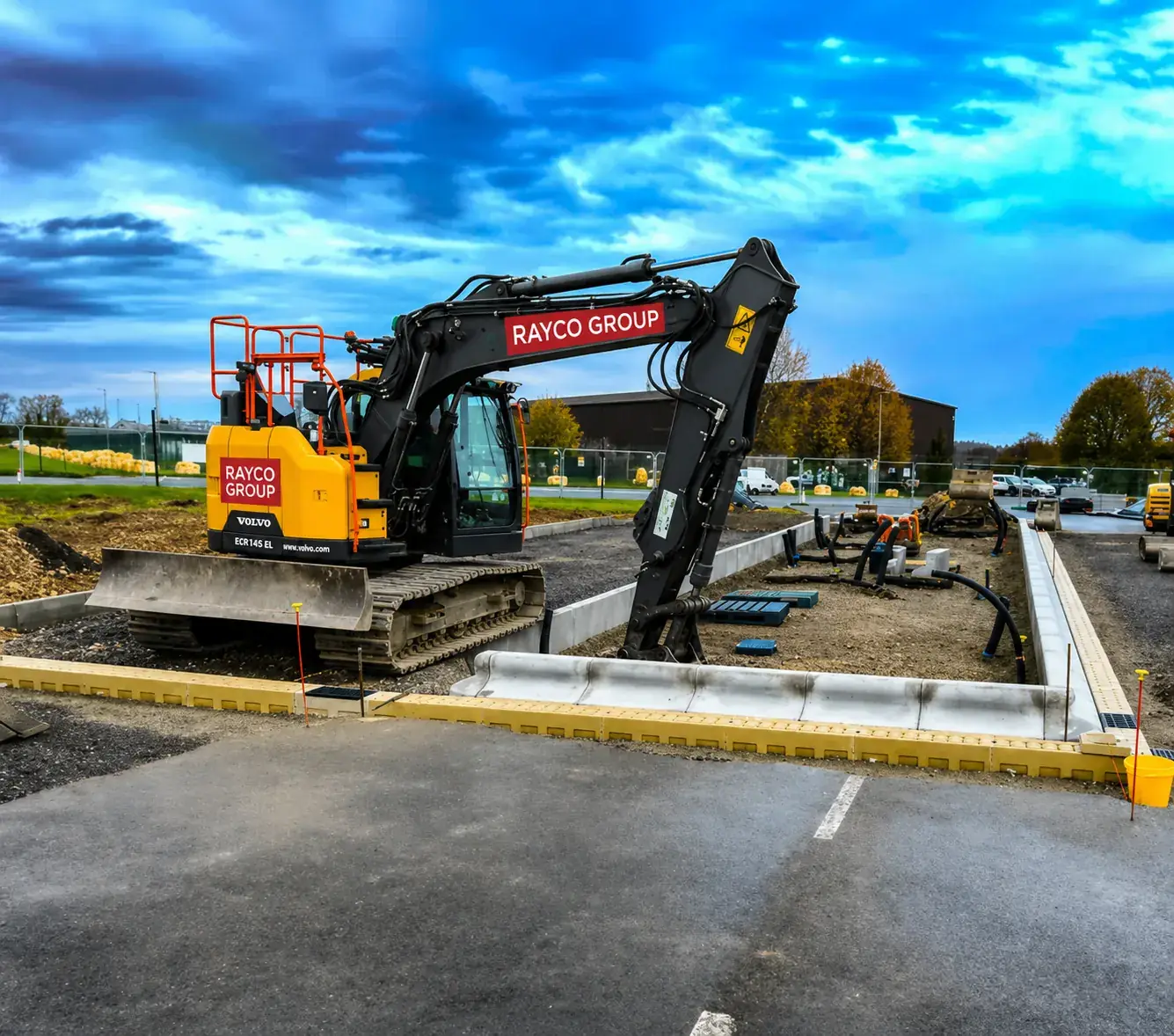
Utility Installation and Ducting Contractors in Ireland
Utility installation on a construction site means excavating trenches and installing the ducts, chambers and draw pits that power, telecoms, water and gas services are later pulled or laid through. Duct type, depth, bedding, warning tape and separation distances are set by each utility provider's specification.
Overview
Ducting is cheap to install and expensive to retrofit. Once a road or slab is closed up, adding a duct means cutting and reinstating it.
Rayco Civils is a civil engineering and groundworks contractor based in Monamolin, Co. Wexford, working on sites across Ireland. Send drawings or a site location and we will price the works.
Scope of works
Depth, bedding and separation are specified, not optional
Each utility sets a minimum cover depth, a bedding requirement and a separation distance from other services. Ducts laid too shallow, in unsuitable backfill or too close to another service will be refused at inspection.
We install to the provider's specification and record the routes as they go in, so connection applications are not held up.
Install before surfaces close
Duct routes, draw pit positions and connection points are agreed with the engineer and utility providers before the road build-up or slab goes down. Spare ducts across roads are usually worth the small extra cost at that stage.
Frequently asked questions
Who is responsible for the connection itself?
The utility provider carries out the live connection and any work on its own network. The site contractor provides the trench, ducting, chambers and bases to the provider's specification and gets them ready for inspection.
What depth should ducts be laid at?
Depth depends on the utility and whether the duct runs under a road, footpath or open ground. Each provider publishes minimum cover requirements, and those figures govern the trench rather than a single site-wide depth.
Should spare ducts be installed?
On road crossings, almost always. Adding a duct later means cutting and reinstating a finished surface, which costs far more than laying a spare duct while the trench is already open.
Explore Civil Works Across Ireland
Jump straight to your service, county, or the exact combination you need.
Most Requested Pages
Services
- Groundworks Ireland
- Foundations Ireland
- Drainage & Ducting Ireland
- Concrete Works Ireland
- Site Clearance Ireland
- Roadworks & Kerbing Ireland
- Excavation Ireland
- Earthworks Ireland
- Site Development Ireland
- Utility Installation & Ducting Ireland
- Kerbing & Footpaths Ireland
- Car Parks & Hard Standings Ireland
- Drainage Repairs Ireland
- Land Clearance Ireland
- Rock Breaking Ireland
- Concrete Slabs & Bases Ireland
- Farm Groundworks Ireland
- Retaining Walls Ireland
- Bulk Excavation Ireland
- Road Repairs Ireland
Priority Counties
Specialist Civil Works Pages
Groundworks by Town
Talk to Rayco Civils
Send your drawings or site location for a free, no-obligation quotation anywhere in Ireland.