
Kerbing & Footpaths Contractors Ireland
Kerbing and footpath construction for estate roads, commercial developments and public areas — precast and in-situ kerb laying, haunching, footpath sub-base, edge restraints and finished pedestrian surfaces set to line and level from setting-out drawings.
Kerbing & Footpaths — Full Scope
What is kerbing & footpaths?
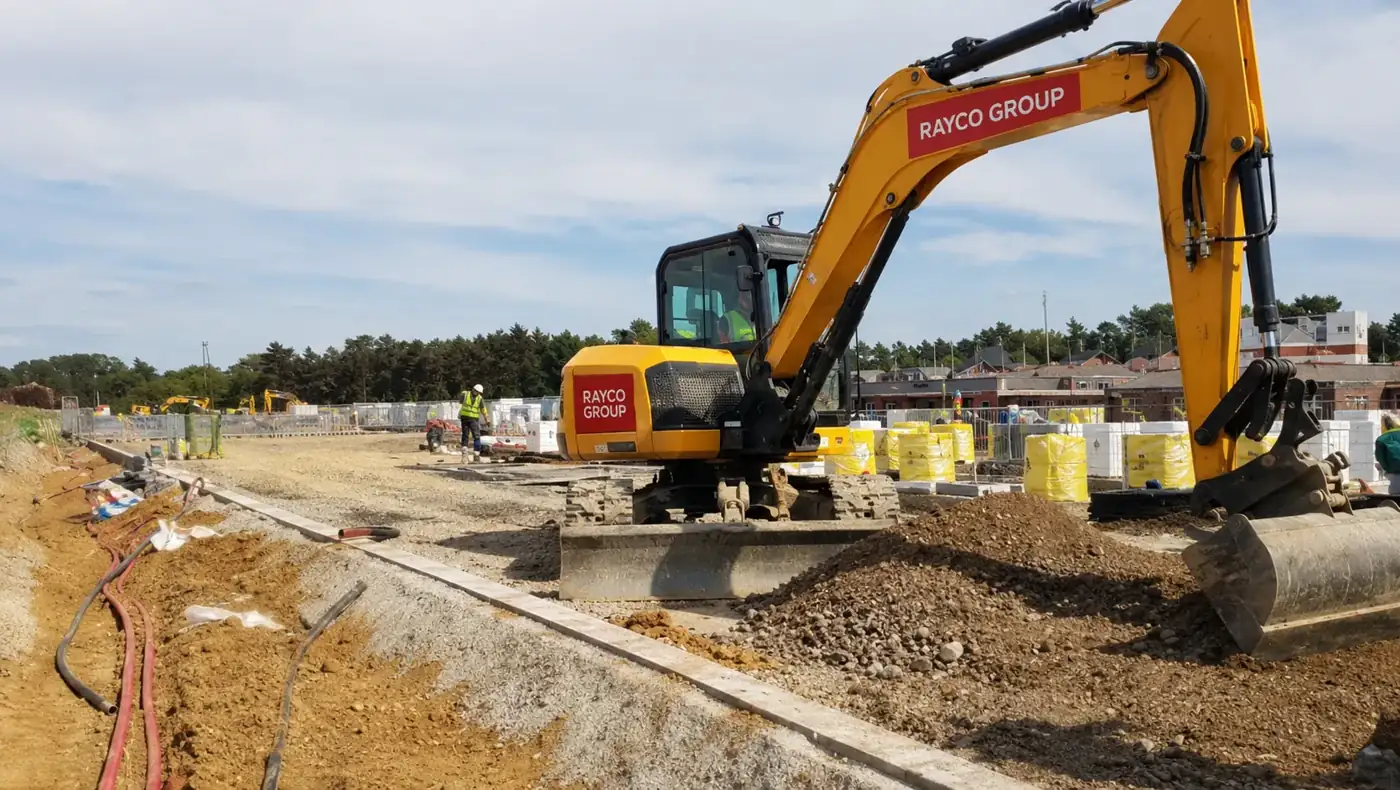
Kerbing defines the edge of a road, protects the surfacing and directs surface water to gullies. Kerbs are bedded and haunched in concrete to a setting-out line and level, with dished kerbs at gullies and dropped kerbs at crossings. Footpaths are then formed on a compacted sub-base with edge restraint. Rayco Civils installs kerbing and footpaths across Ireland.
Kerbing & Footpaths — Frequently Asked Questions
What is kerb haunching?
Haunching is the concrete placed behind and beneath a kerb to hold it in position against traffic loading and the pressure of the adjacent surfacing. Without it kerbs move out of line.
What is a dished kerb?
A dished kerb is a lowered kerb unit set at a gully so surface water can run off the road into the drainage system.
What is required for accessible crossings?
Pedestrian crossing points need dropped kerbs flush with the road surface and appropriate tactile paving, so the crossing is usable by wheelchair users and people with visual impairment.
Do you lay paved as well as concrete footpaths?
Yes. Footpaths are constructed in concrete or in paving on a compacted sub-base with edge restraint, depending on the specification.
Kerbing & Footpaths by County
We deliver kerbing and footpaths packages across every county in Ireland. Tap your county for local detail.
Explore Civil Works Across Ireland
Jump straight to your service, county, or the exact combination you need.
Most Requested Pages
Services
- Groundworks Ireland
- Foundations Ireland
- Drainage & Ducting Ireland
- Concrete Works Ireland
- Site Clearance Ireland
- Roadworks & Kerbing Ireland
- Excavation Ireland
- Earthworks Ireland
- Site Development Ireland
- Utility Installation & Ducting Ireland
- Car Parks & Hard Standings Ireland
- Drainage Repairs Ireland
- Land Clearance Ireland
- Rock Breaking Ireland
- Concrete Slabs & Bases Ireland
- Farm Groundworks Ireland
- Retaining Walls Ireland
- Bulk Excavation Ireland
- Road Repairs Ireland
Priority Counties
Specialist Civil Works Pages
Groundworks by Town
Quote for Kerbing & Footpaths
Free, no-obligation kerbing and footpaths quote — anywhere in Ireland. Call us or send your drawings.